The Twin City Agreement between Netanya and Dortmund was signed on 16 November 1981 by Reuven Kligler, Mayor of Netanya, and Günter Samtlebe, Mayor of Dortmund. The decision to establish the partnership had been made in 1980, and the exchange of the Twin City charters took place first in Dortmund and later in Netanya.
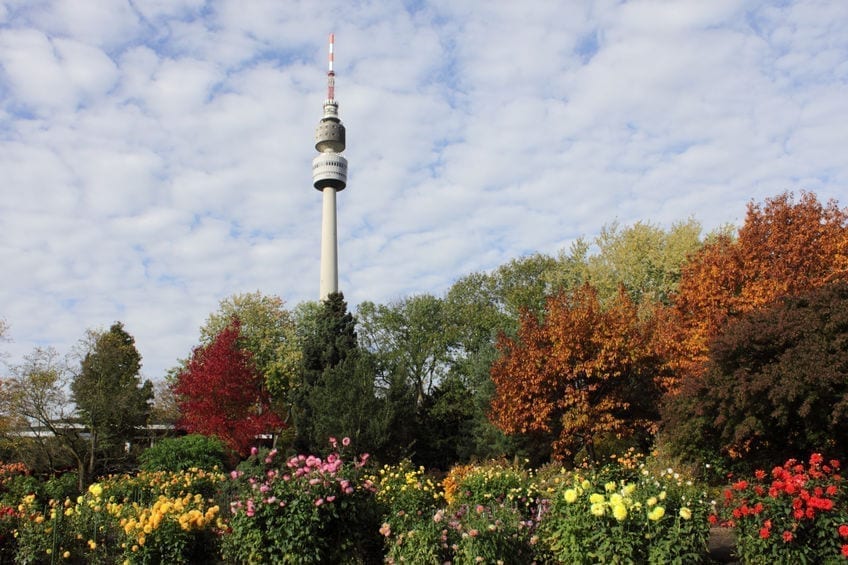
Dortmund is the largest city in the Ruhr region and the third-largest city in the German state of North Rhine-Westphalia. The city has a population of approximately 615,000, while the Dortmund metropolitan area is home to more than 2.5 million people.
Founded around the year 880, Dortmund became one of the most important cities of the Hanseatic League during the Middle Ages. In the 19th and 20th centuries, it developed into a global center for coal and steel production. Today, Dortmund is a leading hub for innovation, technology, research, higher education, and services.
The city is renowned for its cultural institutions, numerous parks and green spaces, as well as TU Dortmund University, one of Germany’s leading universities in engineering and science.
Dortmund is especially identified with Borussia Dortmund, founded in 1909, one of Europe’s most successful and popular football clubs. The club has won numerous German championships, the DFB-Pokal, the UEFA Champions League, and other international titles. Its home stadium, Signal Iduna Park, is one of the largest and most famous football stadiums in Europe.
For more than four decades, Netanya and Dortmund have maintained close ties through exchanges of delegations and cooperation in the fields of education, culture, and youth, while promoting dialogue and friendship between the two communities.